 View ritual
Rough & Dry Hair Revival
Don't wait for someone to ask you 'Do you have a bad hair day?' Instead, wear your crown perfectly with thicker, silkier, shinier hair.
Repair rituals for dry, rough and frizzy hair — keratin shampoo, collagen hair masks and anti-frizz humidity shield sprays suited to Indian humidity. And if your bigger worry is shedding rather than dryness, our hair fall and regrowth ritual is the place to begin.


The Royally Homemade Hair Repair Guide
Why Hair Turns Rough, Dry & Frizzy — And How to Restore Softness
The honest science of dry, damaged and frizzy hair — and a weekly ritual that brings back smoothness without false promises
Rough, dry, frizzy hair does not happen because you did something wrong. It happens because hair is a fibre, and fibres wear out. Every wash, every brush, every hour in the sun, every braid, every round of heat styling and every chemical treatment removes a tiny amount of the protective lipid and protein layer that keeps the cuticle lying flat. Once the cuticle lifts, moisture escapes, the strand feels rough, and humidity rushes in to swell the fibre — that is frizz.
The good news is that most dry, frizzy, damaged hair can be made dramatically softer, shinier and easier to manage. The key is to stop treating it as a single problem and start treating it as three: moisture loss, protein loss, and ongoing mechanical and environmental damage.
Dry hair vs damaged hair — they are not the same
Dry hair lacks moisture and oil. It feels straw-like, tangles easily and looks dull, but the structure underneath is usually intact. A few weeks of proper conditioning, oiling and humidity protection can transform it.
Damaged hair has lost protein from the cortex itself. It snaps when stretched, splits at the ends, feels gummy when wet and looks see-through at the tips. Damage cannot be permanently repaired because hair is dead tissue — once the protein scaffold is broken, no product glues it back together. What products can do is fill and smooth the cuticle temporarily, reduce breakage, prevent further damage and make the hair look and feel dramatically better while you trim away the worst.
Moisture fixes dryness. Protein smooths damage. Trimming removes what is beyond saving.
Why Indian hair frizzes so easily
- ✦Humidity — Indian air holds a lot of moisture, and dry, porous hair absorbs it, swells the cuticle and creates frizz.
- ✦Hard water — calcium and magnesium deposits coat the strand, making it stiff, dull and prone to tangles.
- ✦Heat styling without protection — daily straightening or curling above 180°C gradually cracks the cuticle.
- ✦Chemical treatments — straightening, rebonding, perming and colouring lift the cuticle and break internal protein bonds.
- ✦Tight ties, rough towels and aggressive brushing — mechanical damage adds up faster than most people realise.
- ✦Skipping conditioner — shampoo cleanses, but without conditioner the cuticle stays open and moisture escapes immediately.
The moisture-protein balance that actually matters
The internet often treats hair as either 'needs protein' or 'needs moisture.' In reality, most rough, dry Indian hair needs both, in rotation. Protein fills gaps in the cuticle and strengthens weak spots. Moisture softens the strand and makes it flexible. Too much protein without moisture makes hair brittle. Too much moisture without protein makes hair limp and stretchy.
A simple rule: if your hair is dry and frizzy but not snapping, start with moisture. If it is snapping, splitting or feels mushy when wet, add protein. Once it improves, alternate the two to maintain the balance.
Why a good shampoo is the foundation
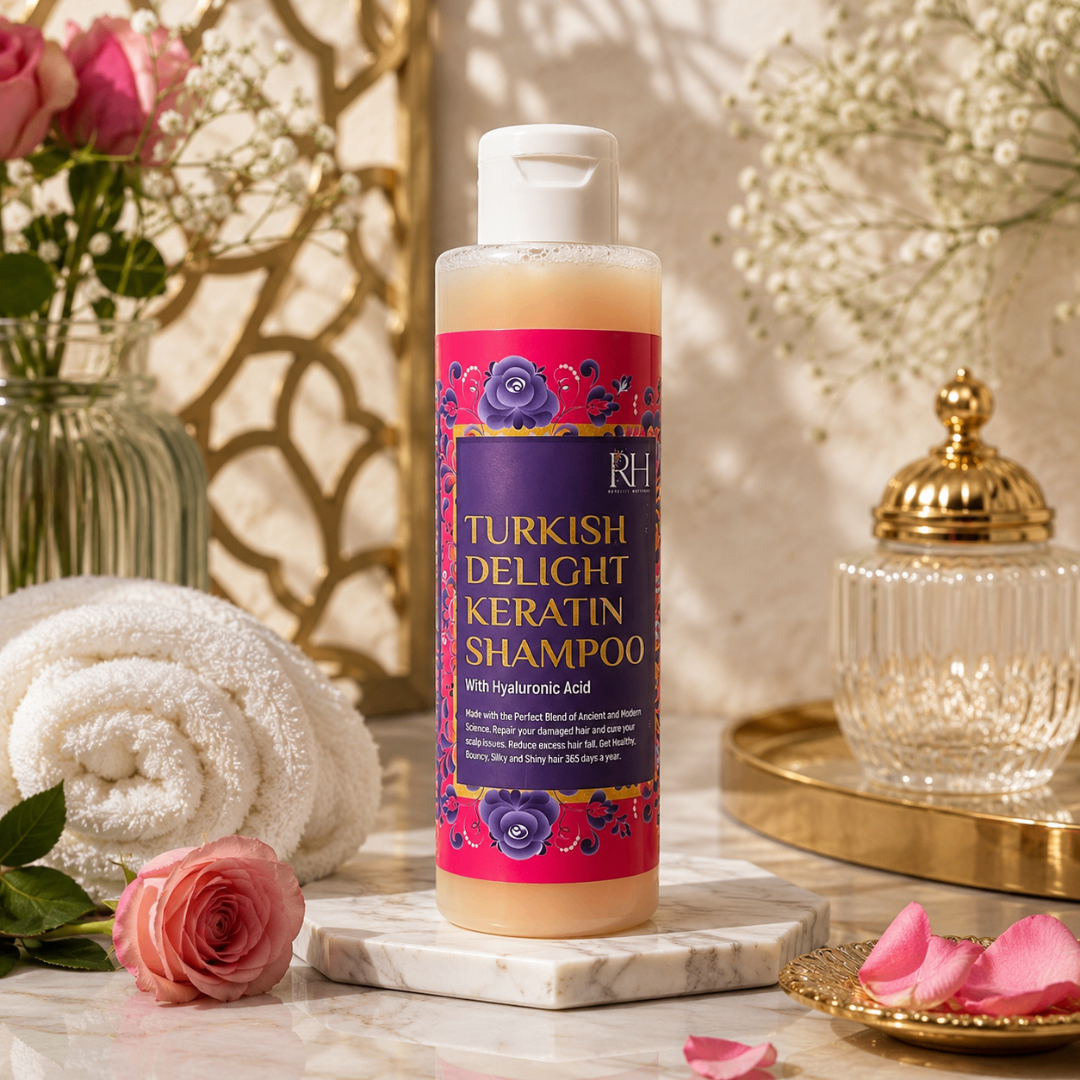
Harsh sulphate shampoos strip the little natural oil the scalp produces, leaving lengths even drier. A gentle, keratin-supporting shampoo cleanses without hollowing the strand. Our Turkish Delight Keratin Shampoo is formulated exactly for this — it removes dirt, sweat and product build-up while respecting the protein structure of dry, processed or frizz-prone hair.
Conditioner, masks and leave-ins — what each one does
- ✦Conditioner closes the cuticle after shampooing, detangles and adds the first layer of moisture. It is non-negotiable for dry or frizzy hair.
- ✦Hair masks are concentrated treatments. They sit longer, penetrate deeper and deliver a stronger dose of conditioning or repair ingredients.
- ✦Leave-in serums and sprays seal the cuticle, add shine and protect against humidity and heat between washes.
The products we build our dry hair ritual around
- ✦Turkish Delight Keratin Shampoo — a gentle cleanse that supports the hair's protein structure instead of stripping it further.
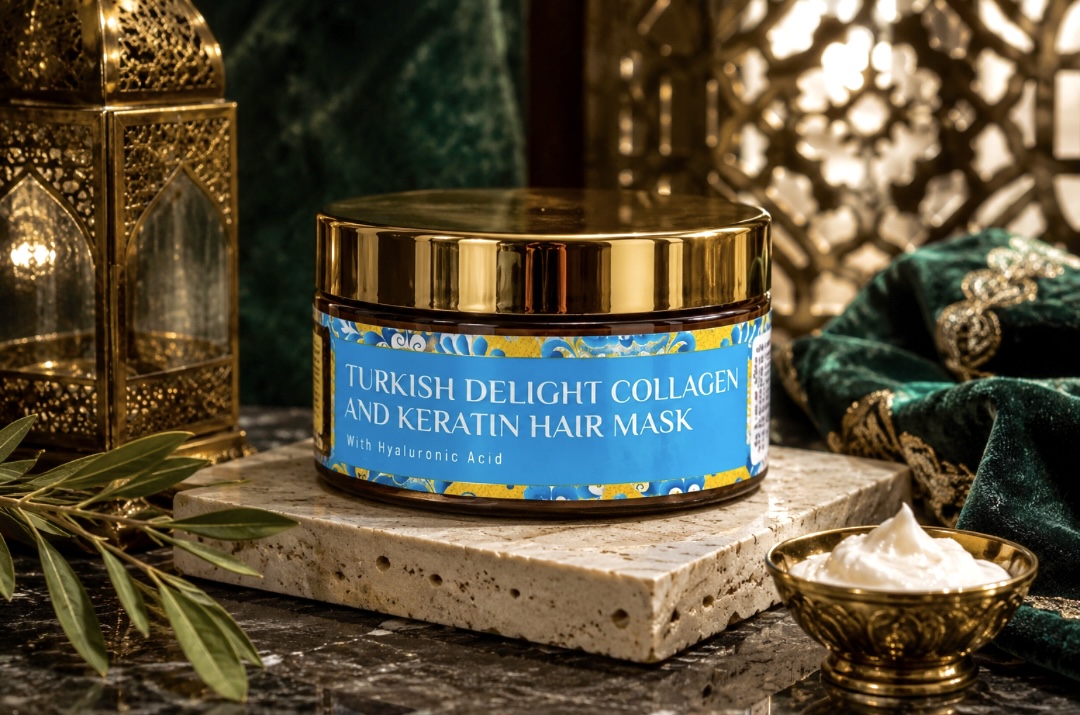
- ✦Turkish Delight Collagen Keratin Hair Mask — the repair step. Collagen and keratin temporarily fill the cuticle, reduce the look of split ends and restore smoothness after chemical or heat damage.
- ✦Mango Butter Shampoo Mask — a rich, two-in-one moisture treatment for hair that feels coarse, stiff or chronically dry. Mango butter softens the strand and makes detangling easier.
- ✦SeriLuxe Silk Protein Hair Repair Serum — a leave-in serum that smooths frizz, adds shine and protects the cuticle from humidity between washes.
- ✦SeriMist Anti-Frizz Humidity Shield Spray — the final defence. Indian humidity undoes a good hair day within an hour, and this spray creates a lightweight barrier against moisture absorption.
- ✦Moroccan Rhassoul Clay Face & Hair Mask — a mineral-rich clay treatment that draws out hard-water build-up and product residue from the scalp and hair, restoring bounce and softness.
A realistic weekly routine for rough, dry, frizzy hair
- 1.Wash twice a week with Turkish Delight Keratin Shampoo. Hot water strips oil, so use lukewarm water and focus the shampoo on the scalp, not the lengths.
- 2.Every wash, follow with Turkish Delight Collagen Keratin Hair Mask or Mango Butter Shampoo Mask on mid-lengths and ends for 10–15 minutes. Alternate between the two depending on whether your hair feels more damaged or more dry.
- 3.Once every two weeks, use Moroccan Rhassoul Clay as a scalp and hair clarifying mask to remove hard-water minerals and residue. Follow immediately with a deep conditioner.
- 4.On damp hair after every wash, apply SeriLuxe Silk Protein Serum from mid-lengths to ends. It seals the cuticle and keeps hair smooth as it dries.
- 5.On dry hair, especially humid days, finish with SeriMist Anti-Frizz Humidity Shield Spray to protect the style and reduce puffiness.
- 6.Between washes, sleep on a satin or silk pillowcase, use a wide-tooth comb, and avoid tight ties that create friction at the same spot every day.
- 7.Judge progress by how hair feels when wet, how easily it detangles, and how much less frizz you see by afternoon — not by whether it becomes permanently straight.
When shedding, not dryness, is the real problem
Sometimes women come to us convinced they have dry hair when they are actually seeing more hair fall than usual. Dryness makes strands break, which looks like hair loss but is really breakage along the shaft. If your main concern is shedding from the root — a widening parting, a thinner ponytail, or hair falling with a white bulb at the end — our hair fall and regrowth ritual is the better starting point.
What honest haircare cannot do
No shampoo, mask or serum can permanently seal a split end or rebuild hair that has been chemically destroyed. Split ends need to be trimmed. Severely damaged hair needs time, patience and eventually a cut. What a well-formulated ritual can do is reduce breakage, restore softness and shine, protect against humidity and heat, and give you the healthiest possible version of the hair you have today.
We would rather tell you to trim an inch than sell you a fantasy of permanent repair.
Frequently Asked Questions
✦Why is my hair so dry and frizzy even after oiling?+
Oiling adds oil, but dry hair usually lacks water and a closed cuticle. If you oil without conditioning, or wash with a harsh shampoo afterwards, the moisture escapes again. Use a conditioner or mask after every wash, seal with a leave-in serum, and protect against humidity with a finishing spray.
✦How often should I wash dry, frizzy hair?+
Twice a week is ideal for most dry hair types. Over-washing strips natural oils, while under-washing lets product and hard-water build-up dull the strand. Use a gentle, sulphate-free keratin shampoo and always condition.
✦Can a hair mask really repair damaged hair?+
A hair mask cannot permanently repair hair because hair is dead tissue. But a good mask can fill and smooth the cuticle, reduce breakage, add shine and make damaged hair feel much softer and stronger while you grow out or trim the worst sections.
✦What is the difference between a hair mask and a conditioner?+
Conditioner is a lighter, daily product that detangles and seals the cuticle after shampoo. A hair mask is more concentrated and is left on longer to deliver deeper conditioning or protein repair. Dry or damaged hair benefits from both.
✦Does keratin shampoo help frizzy hair?+
Yes, when the formula is gentle. Keratin shampoo cleanses without stripping and supports the hair's protein structure, which helps the cuticle lie flatter. That means less frizz, more shine and easier styling over time.
✦How do I stop my hair from frizzing in humid weather?+
Humidity swells the cuticle, so the goal is to seal it. After washing, apply a leave-in serum like SeriLuxe Silk Protein Serum, then finish dry hair with an anti-humidity spray like SeriMist. Avoid touching your hair too much during the day, as friction invites frizz.
✦Is heat styling safe for dry or damaged hair?+
It is safer when minimised. Always use a heat protectant, keep tools below 180°C, and limit straightening or curling to once or twice a week. Daily high heat will continue to damage hair no matter how good your products are.
✦Why does my hair feel rough after washing with hard water?+
Hard water leaves mineral deposits on the hair shaft, making it stiff, dull and prone to tangles. A clarifying clay mask once every two weeks removes this build-up, followed by a deep conditioner to restore softness.
✦How long before dry hair starts feeling soft again?+
Hydration and smoothness usually improve within two to three washes. Significant softness, shine and reduced breakage take six to eight weeks of consistent conditioning, masking and protection.
✦When should I see a hair specialist or trichologist?+
See a specialist if you have sudden patchy hair loss, scalp pain, excessive shedding from the root, or hair that breaks off in clumps. These can signal medical or nutritional issues that products alone cannot fix.
A Personal Invitation
Can you pick your product by yourself, or do you want us to create a perfectly personalized regimen for you?